
World Cup
Netherlands and Morocco Turn Up the Heat

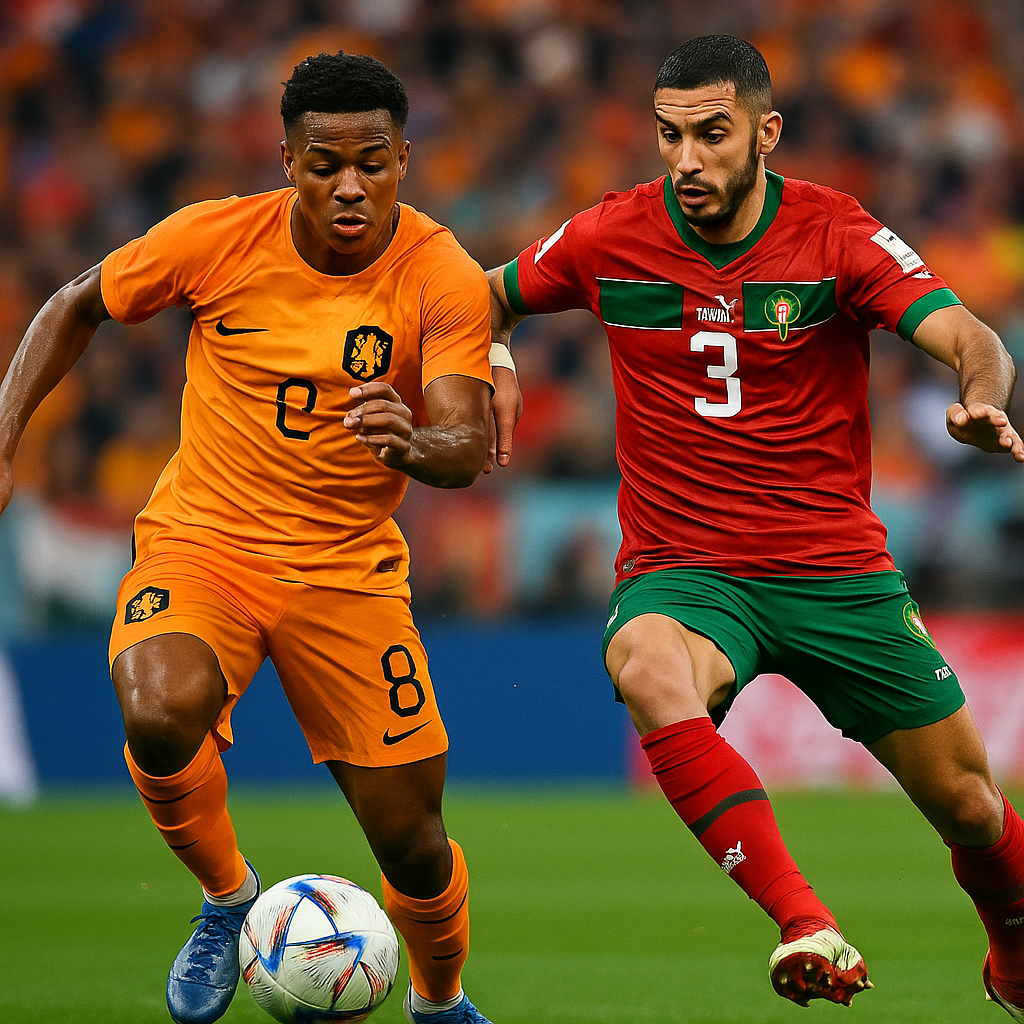
Netherlands vs Morocco: Tactical Battle Set for World Cup Last 32
Morocco’s resilience and structural organization face a stern test against the fluid and dynamic Netherlands side in the World Cup round of 32. This clash will pivot on transitional control and strategic adaptability.
The fundamental question for Morocco is how effectively they can disrupt the Netherlands’ rhythm while imposing their disciplined defensive framework. Morocco enters this knockout phase having demonstrated tactical cohesion in their defensive transitions and disciplined press resistance. Yet, the key tension lies in whether their midfield structure can contend with the Dutch’s quick interplay and variable attacking channels.
The Netherlands, traditionally proficient in positional fluidity and width exploitation, will likely seek to destabilize Morocco through rapid vertical passing and overloads on the flanks. Their ability to stretch the Moroccan backline will create spaces for intricate combinations inside the box. Meanwhile, Morocco’s tactical priority will be to maintain compactness between lines and force the Dutch into lower-probability shooting angles. The Moroccan transition from defense to attack, especially when recovering possession, will also be crucial, as turnovers could quickly turn into counterattacking opportunities.
The last-32 stage leans heavily on squad depth and tactical patience. Morocco’s success depends on sustaining defensive organization under pressure and selectively committing players forward. The Dutch side’s capacity to vary tempo and deploy adaptive pressing patterns will challenge Morocco’s structural resilience. Set-piece discipline and minimizing careless turnovers will be essential for the African side to neutralize the Dutch’s offensive rotations.
Ultimately, this match will be decided in moments where structure gives way to creative impulse or defensive rigidity provokes technical errors. Morocco’s tactical identity, grounded in disciplined transitions and compact formations, will face a stern examination against a Netherlands squad built for positional versatility and sustained pressure. The outcome will hinge on which team better manages the balance between control and risk in this high-stakes World Cup encounter.