
World Cup
South and Africa Turn Up the Heat

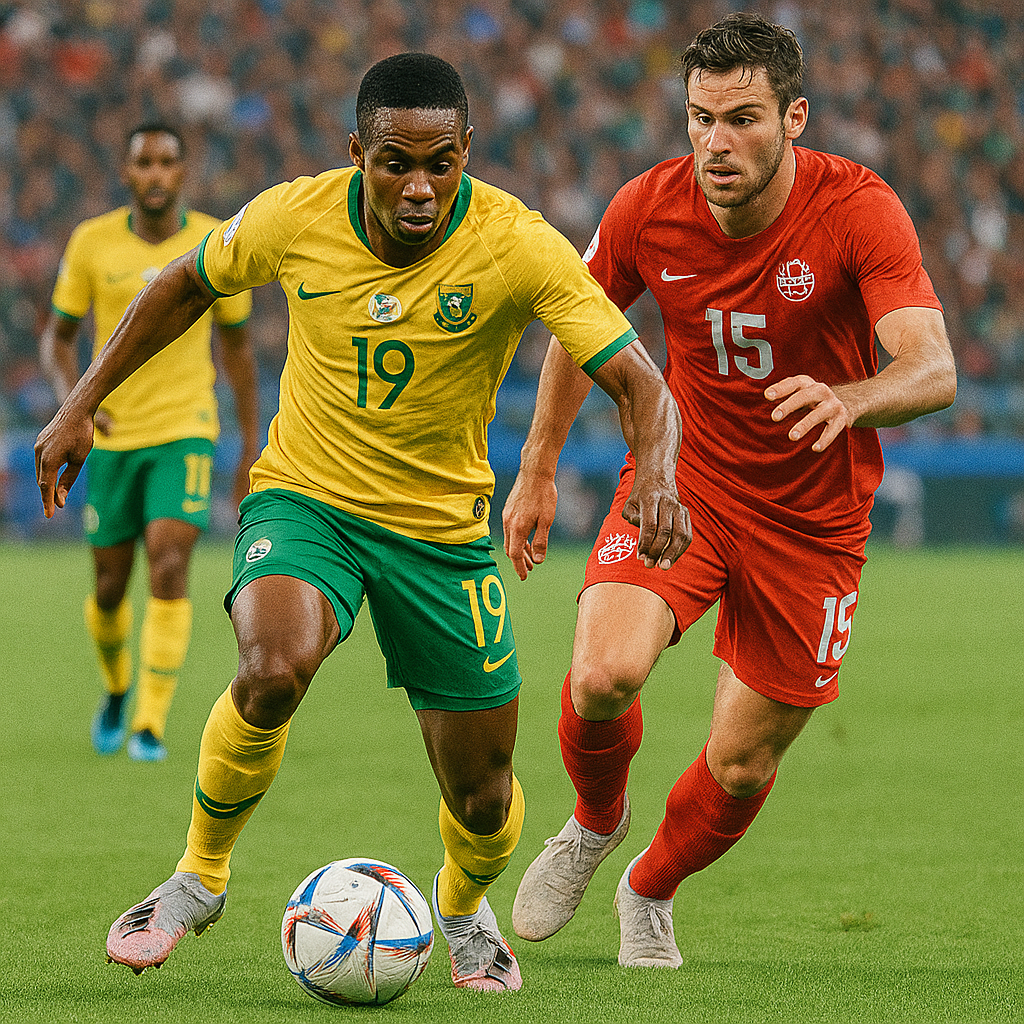
South Africa’s structural test against Canada in the World Cup last 32
South Africa’s round of 32 clash with Canada on June 28 presents a critical tactical examination for the Bafana Bafana. Both teams arrive calibrated but largely unproven at this World Cup stage, leaving questions around South Africa’s ability to impose structure and transition fluidity against a compact and industrious Canadian side.
At the core of this encounter lies South Africa’s challenge to balance possession control with rapid, intelligent transitions. Historically, South African teams have struggled when required to shift from a conservative block into dynamic forward momentum. The key tension is whether South Africa can sustain structural discipline in buildup phases while exploiting transitional bursts before Canada regroups defensively.
Canada’s profile suggests a highly organized defensive framework coupled with direct counterattacking potential. This matters because South Africa’s tactical approach needs to neutralize Canada’s compactness around the midfield and prevent quick, vertical breaks. Evidence from recent international fixtures shows Canada excels when forcing opponents wide or into rushed passing sequences—areas where South Africa must maintain calm, patient ball circulation and precise positional rotations.
Meanwhile, South Africa’s own challenges include consistency in defensive line coordination and midfield cohesion under pressure. If the backline fails to compress effectively during Canada’s counters, this will expose vulnerabilities on the flank. Similarly, midfield gaps risk isolation unless players synchronize pressing triggers and passing lanes. The key shift for South Africa will be their transition speed out of deeper blocks: successful vertical passing can destabilize Canadian defensive zones and open channels for advanced runners.
Ultimately, South Africa’s success in this match depends on tactical precision rather than flair. The team must carefully manage phases of possession without reckless aggression and ensure that their transitions disrupt Canadian defensive rhythm. This measured approach offers South Africa their best route forward in navigating what promises to be a structurally demanding World Cup knockout encounter.