
World Cup
Canada and South Turn Up the Heat

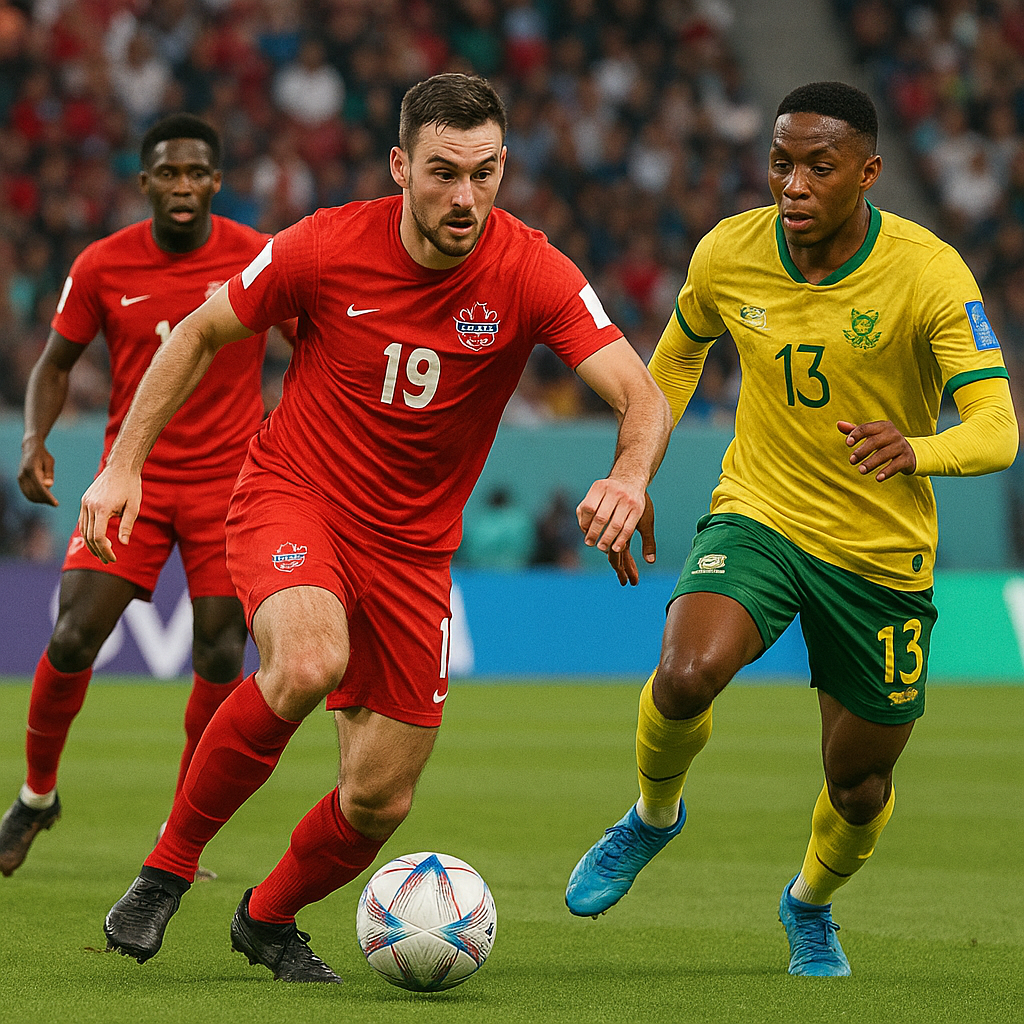
Canada edges South Africa as tactical discipline shapes last-32 encounter
Canada’s narrow 1-0 victory over South Africa in the FIFA World Cup last-32 reflects a calculated tactical approach that prioritized defensive structure and controlled transitions. This result carries immediate implications for group standings, while also spotlighting areas where both sides faltered structurally.
The core question heading into the match was whether Canada could impose its disciplined defensive framework against a South African side known for regenerative counterattacking. From the outset, Canada demonstrated cohesive shape in their defensive third, maintaining compact lines that limited South Africa’s penetration options. This compression forced South Africa into low-probability attempts rather than clear chances on goal. Canada’s backline showed focused coordination, suggesting extensive preparation in contingency defending and zonal cover.
However, the Canadian performance was not without subtle risks. The team relied heavily on measured possession in midfield to deny South Africa space to exploit transitions. This approach reduced immediate offensive threat but increased resilience during South Africa’s surges. That matters because it reveals Canada’s tactical trade-off between momentary attacking ambition and sustained defensive solidity. Maintaining a compact midfield shield curtailed South Africa’s ability to advance through quick combinations or dribbled progression.
South Africa’s tactical response lacked sufficient adaptation. They struggled to break Canada’s lines effectively, particularly in the final third, where Chilean attempts to create overloads were consistently stifled. The inability to destabilize Canada’s disciplined defensive posture limited South Africa’s scoring opportunities. This tactical rigidity may raise questions about South Africa’s versatility under pressure in knockout stages.
Ultimately, Canada’s slender 1-0 margin reflects a match dictated by defensive discipline and midfield control rather than open attacking fluidity. The victory secures three points and enhances Canada’s goal difference — a valuable asset moving forward. For South Africa, the defeat compounds pressure to diversify their tactics and sharpen their phase control as the tournament progresses. This encounter underlines how structured defensive integrity remains a foundational pillar in World Cup knockout football.