
World Cup
Canada’s 6-0 demolition of Qatar in their 2026 World Cup Group B opener marks more than just a convincing

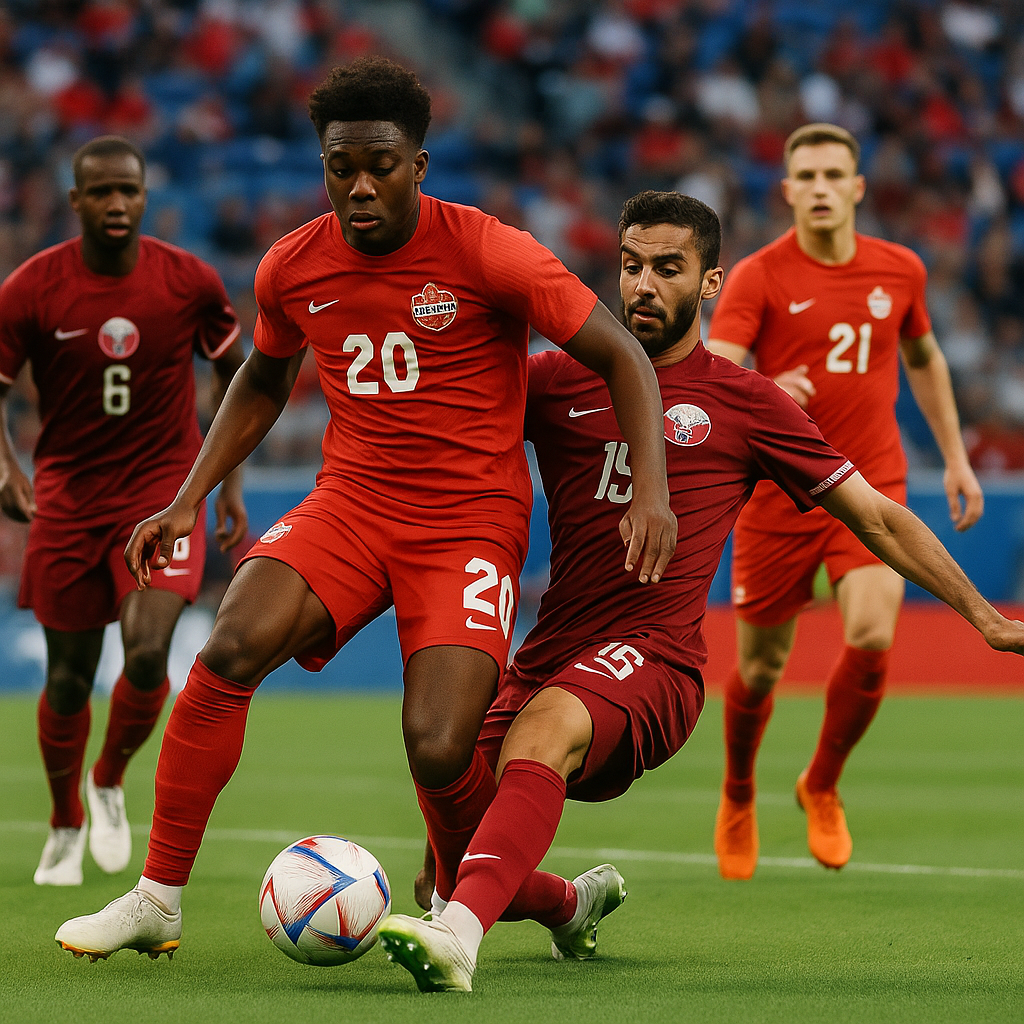
Canada’s 6-0 demolition of Qatar in their 2026 World Cup Group B opener marks more than just a convincing victory; it reveals a side mastering transition phases and exploiting structural weaknesses with ruthless efficiency. From the first whistle, Canada demonstrated a clear tactical blueprint that prioritized rapid ball progression and positional fluidity, effectively dismantling Qatar’s defensive shape.
Central to Canada’s dominance was their capacity to control the rhythm through sustained high-pressure moments and direct, vertical ball circulation. This applied immediate strain on Qatar’s backline, which struggled to maintain compactness under pressure. Qatar’s attempts to build from the back faltered repeatedly due to Canada's coordinated pressing triggers, forcing turnovers in dangerous areas. Such disruption in transition was a significant factor leading to Canada’s expansive goal count.
Canada’s mid-block maintained a disciplined shape, but what stood out was their intelligent exploitation of wide zones. Utilizing width with incisive crosses and overlapping runs stretched Qatar’s defensive lines horizontally. This tactical widening created pockets of numerical superiority in attacking thirds, enabling Canada to convert chances with clinical precision.
Defensively, Canada showcased solid organisation, conceding no meaningful chances to Qatar. Their shape remained compact without sacrificing vertical mobility, allowing rapid recovery runs to neutralize counterattacks. The clean sheet also reflects Qatar’s limited threat potency—an imbalance in Group B goalkeeper challenges for Canadian defenders.
On standings, this emphatic +3 point haul and a +6 goal differential immediately positions Canada as serious contenders for group qualification. The goal difference also serves as a valuable buffer in what will likely become a more tactical and cautious battle against Bosnia-Herzegovina and Switzerland.
Discipline-wise, the match passed without notable incidents, suggesting Canada’s focus was fully on application rather than reaction. This measured approach bodes well for maintaining squad cohesion and stamina as the group stage progresses.
In sum, Canada’s performance was not merely an exercise in goal-scoring; it was a tactical statement. They asserted control in transition phases, exploited structural weaknesses in Qatar’s formation, and imposed their agenda with controlled aggression. For Canada, this win is both a quantitative boost and a qualitative blueprint heading deeper into Group B.