
World Cup
Group B: Switzerland and Edge Under Pressure

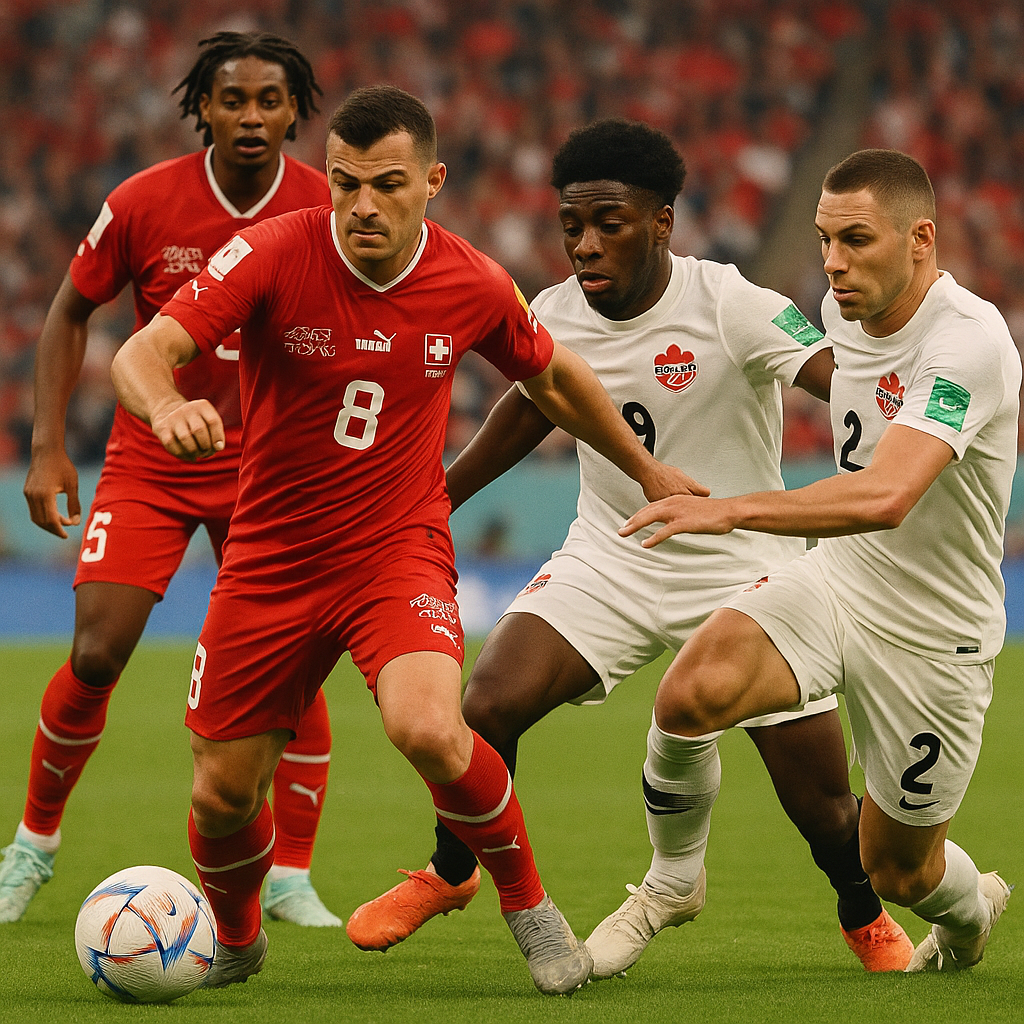
Switzerland Edge Canada to Secure Vital Group B Advantage
In a tightly-contested Group B World Cup clash, Switzerland edged Canada 2-1, a result that underlines Swiss tactical maturity and disrupts Canada’s push for progression. The match highlighted Switzerland’s ability to control critical phases through structured transitions, a defining element of their World Cup campaign so far.
The central question going into this encounter was how Switzerland would manage Canada’s physical and counter-attacking threat. Throughout the match, Switzerland relied heavily on controlled possession phases combined with vertical ball progression, limiting Canada’s opportunity to build sustained pressure. This was not a display of overwhelming dominance but rather one of precise balance. Switzerland avoided reckless pressing and instead maintained a compact defensive block, exploiting moments when Canada overcommitted.
Canada, known for their physicality and direct style, showed moments of potential threat but struggled to impose consistent offensive rhythm. Switzerland’s midfield structure operated as an effective filtering line, cutting passing lanes and preventing the Canadian forwards from finding space between the lines. This containment forced Canada into an over-reliance on long balls, which Switzerland’s defensive shape was well-prepared to handle.
The key shift occurred after Switzerland’s second goal, where they transitioned from controlled buildup to calculated risk-taking. This tactical adjustment put Canada under tighter pressure, revealing the Swiss side’s adaptability beyond static patterns. Though Canada managed to pull a goal back, their defensive exposure increased due to chasing the game, which Switzerland exploited with measured counterattacks.
From a disciplinary and squad management perspective, the match remained relatively clean and composed, allowing both teams to maintain their planned tactical approaches without disruption. Switzerland’s win not only offers three points but also a superior goal difference that could prove decisive in the group standings.
Ultimately, Switzerland’s victory reflects a team growing comfortable with its structural identity—leveraging tactical discipline and controlled transitions while neutralizing a hard-running Canadian side. This result secures Switzerland’s favorable position in Group B and raises questions about Canada’s capacity to respond under mounting pressure.