
World Cup
Spain and Austria Turn Up the Heat

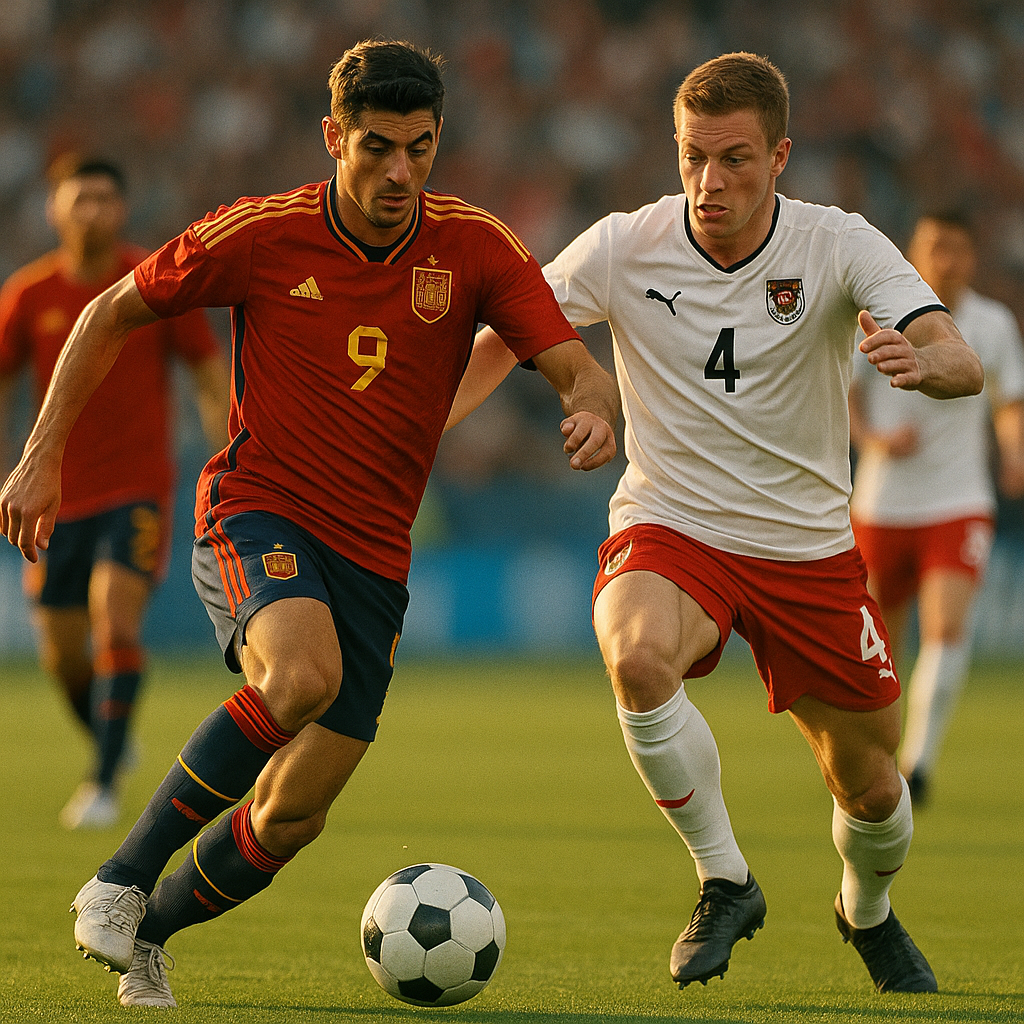
Spain’s tactical poise to challenge Austria’s structured resilience
This World Cup last-32 fixture pits Spain’s possession-based approach against Austria’s disciplined positional structure. Understanding their contrasting tactical identities is crucial to anticipating the key phases that will define the match.
Spain’s hallmark lies in controlled ball circulation, aiming to dominate space through short passes and positional rotation. This methodical buildup aims to unlock opposition defensive blocks by exposing channels between lines. Austria, conversely, prefers a compact shape that prioritizes organized defensive transitions, seeking to resist incrementally across the pitch rather than conceding high-risk areas. The tension emerges in how Austria manages Spain’s territorial dominance without passive retreat, maintaining balance between defensive integrity and counter-attacking threat.
A critical dimension is Spain’s capacity to manipulate space in midfield, often employing wide players to stretch Austrian defensive lines. This draws Austria into lateral shifts, creating pockets for their key central creators. However, Austria’s structural discipline, anchored by coordinated pressing triggers and compact lines, aims to disrupt Spain’s rhythm before it fully develops in the final third. Success for Austria hinges on timed pressing sequences and rapid transition execution, capitalizing on moments when Spain’s structure temporarily relaxes for forward progression.
Meanwhile, Spain’s defensive strategy involves patience under pressure and efficient ball recovery to sustain possession dominance. The quality of their positional rotations and ability to recapture possession high up the pitch increases Austria’s vulnerability to sustained pressure. Austria must avoid fragmented defensive moments that Spain can exploit with clinical precision.
This encounter frames a classic confrontation of Spain’s fluid, possession-driven philosophy against Austria’s methodical, structurally disciplined approach. The outcome will largely depend on Austria’s capacity to impose their tactical compactness under Spain’s persistent ball control, defining whether resilience or control triumphs in this pivotal World Cup tie.