
World Cup
Brazil’s opening Group C match at the 2026 World Cup ended in a 1-1 draw against Morocco, a result that reads

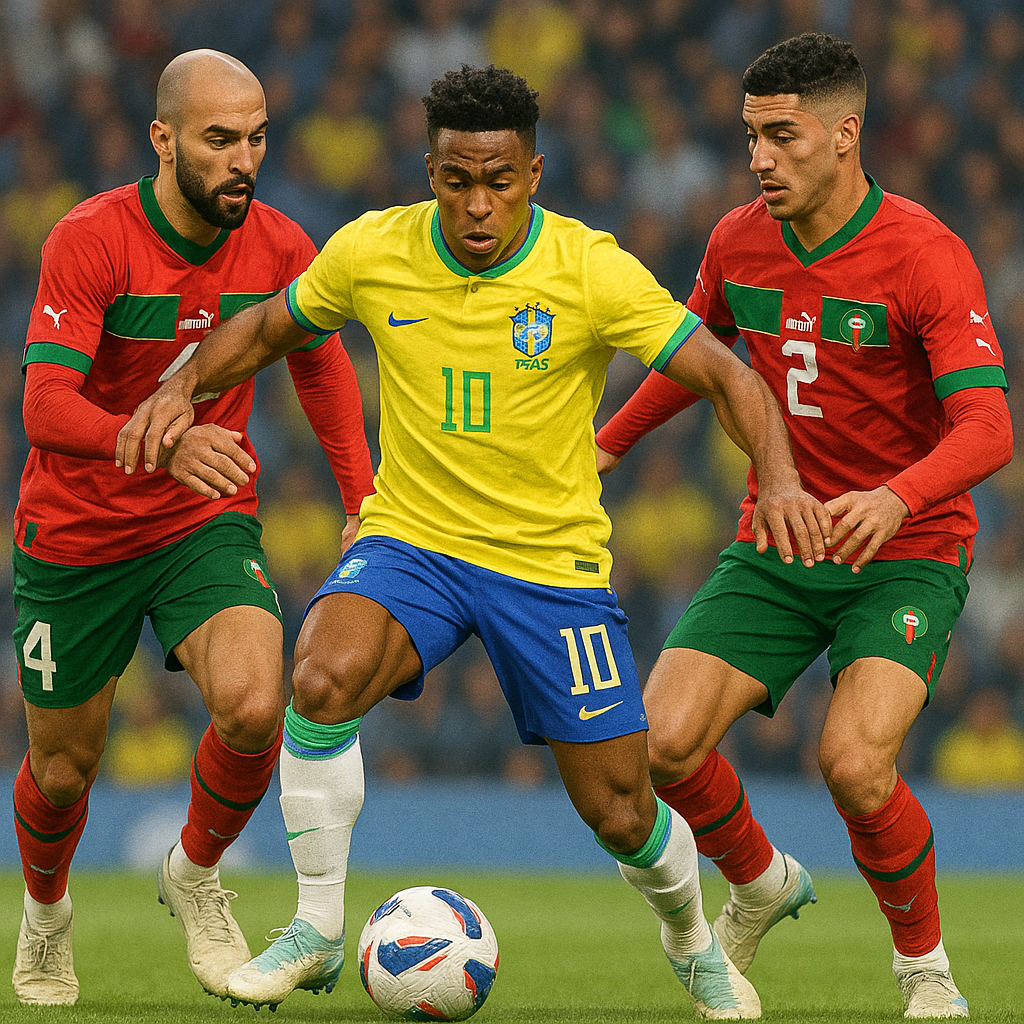
Brazil’s opening Group C match at the 2026 World Cup ended in a 1-1 draw against Morocco, a result that reads as more than a statistical footnote—it demands a nuanced tactical analysis to understand the evolving dynamics of both teams in this pivotal group stage.
Morocco’s discipline and structural compactness were evident throughout the match. The Atlas Lions operated a well-drilled defensive block that limited Brazil’s usual creative freedom in central attacking zones. Their midfield shield, though less flamboyant, was positioned with tactical maturity, enabling Morocco to absorb pressure without sacrificing position or throwing the backline into disarray. This defensive organization forced Brazil into wider corridors where their crossing threat was present but ultimately lacked the final precision required to secure victory.
On the transition phase, Morocco showed promising intent. Their transitions were situationally intelligent rather than reckless; quick vertical balls coupled with effective spacing unsettled Brazil’s midfield shape temporarily. This balance between defensive solidity and measured forward movement reflects the growth of Moroccan tactical maturity, particularly relevant as they aim to establish themselves beyond African football stereotypes focusing purely on physicality.
Brazil, traditionally dominant through fluid possession and incisive movement, found themselves recalibrating. Their structural coherence in buildup play was compromised by Morocco’s pressing triggers and compact shape, highlighting Brazil’s slight tactical inflexibility under pressure. This match exposed Brazil’s vulnerability when forced into prolonged attacking sequences against a disciplined defense—a tactical challenge they must resolve in subsequent group matches to avoid unexpected drops in points.
From a broader tournament context, this draw injects complexity into Group C. Morocco gains vital momentum, positioning themselves as serious contenders beyond the expected Brazilian dominance. Brazil, meanwhile, must reassess their approach and reinforce tactical depth to avoid further setbacks.
Discipline-wise, both teams maintained control with minimal infractions, reflecting a composure essential in tournament football. This match serves as a reminder that tactical structure and transitional intelligence can disrupt individual quality and highlight the evolving competitive parity in World Cup group stages.