
World Cup
Brazil and Japan Turn Up the Heat

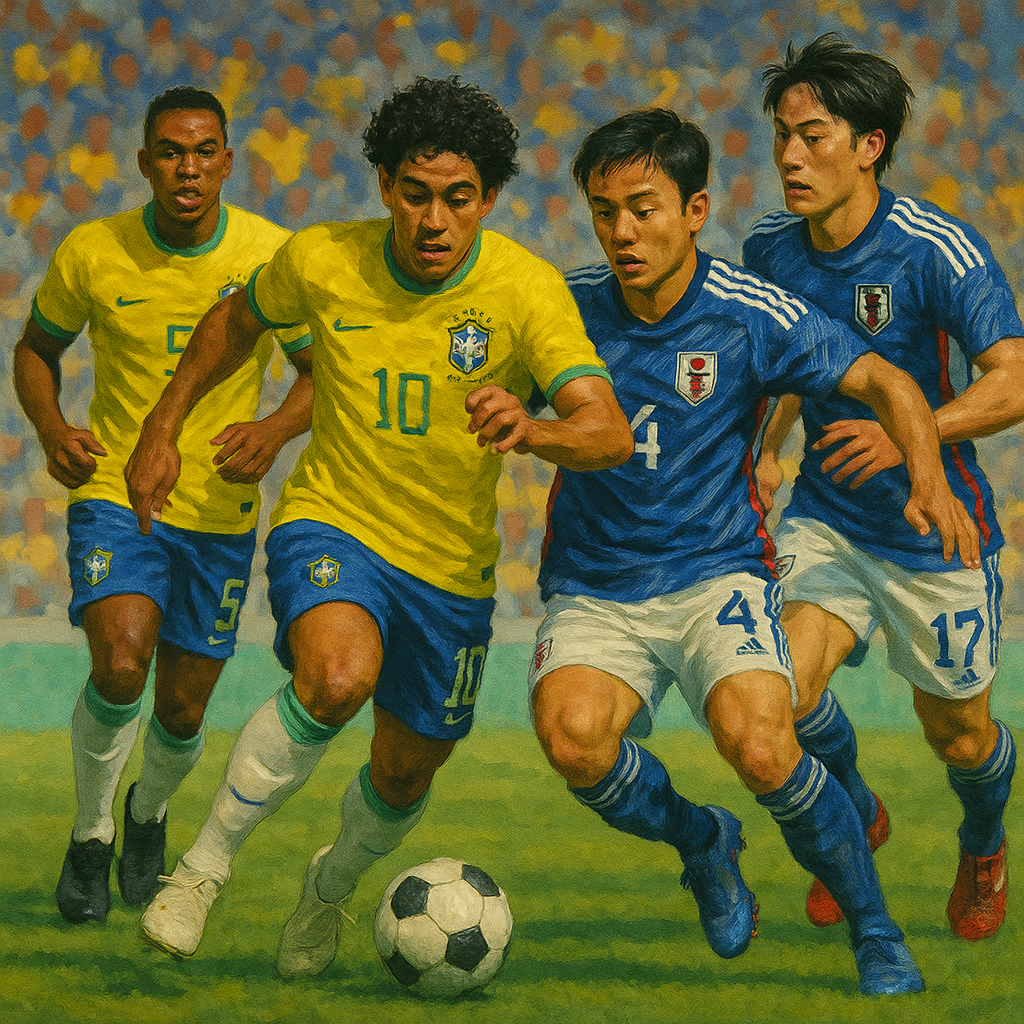
Brazil edges Japan 2-1 in a tense World Cup knockout clash
Brazil’s narrow victory over Japan in the Round of 32 underscores a balance between structural control and moments of transitional vulnerability that defined this tightly contested encounter. The result secures Brazil’s progression with three valuable points, while Japan must reassess after finishing with a negative goal difference.
The central question posed by this match was Brazil’s ability to impose their tactical identity against a Japanese side known for technical discipline and rapid counterattacks. Brazil managed to assert controlled possession in phases, particularly in the midfield zones where their structured ball circulation allowed them to probe and destabilize Japan’s compact defensive lines. The subtlety in Brazil’s build-up play reflected an emphasis on patient positional play rather than reckless forward surges, prioritizing sustainable territorial gain.
However, Brazil’s strategy was tested whenever Japan transitioned quickly from defense to offense. Japan’s high-tempo counters exploited moments when Brazil’s midfield line extended too far forward, leaving pockets between midfield and defense vulnerable. This dynamic contributed directly to Japan’s single goal and exposed the delicate balance Brazil must maintain between pressing aggressively and preserving defensive shape.
The key shift came in Brazil’s ability to regain momentum in the second half by adjusting their transition triggers. By tightening lines and reassigning midfield marking responsibilities, Brazil reduced Japanese counter opportunities. This structural recalibration allowed Brazil to reassert dominance in possession while incrementally pushing Japan into deeper defensive positions. Brazil’s two goal scorers capitalized on this tactical tightening, demonstrating clinical finishing from well-constructed attacking phases rather than chaotic chance creation.
Ultimately, Brazil’s victory advances them with a +1 goal difference margin, a slim but critical buffer in World Cup knockout arithmetic. The match exposed Brazil’s ongoing need for disciplined transition management and highlighted the complexity of facing a well-organized low block paired with rapid counters. Brazil’s success lay in controlled structural adaptation rather than raw talent alone—an important nuance as the tournament progresses. Japan, meanwhile, will regroup with a clear mandate to shore up their transitional defense if they are to compete at this level consistently.