
World Cup
Group F: Japan and Sweden Under Pressure

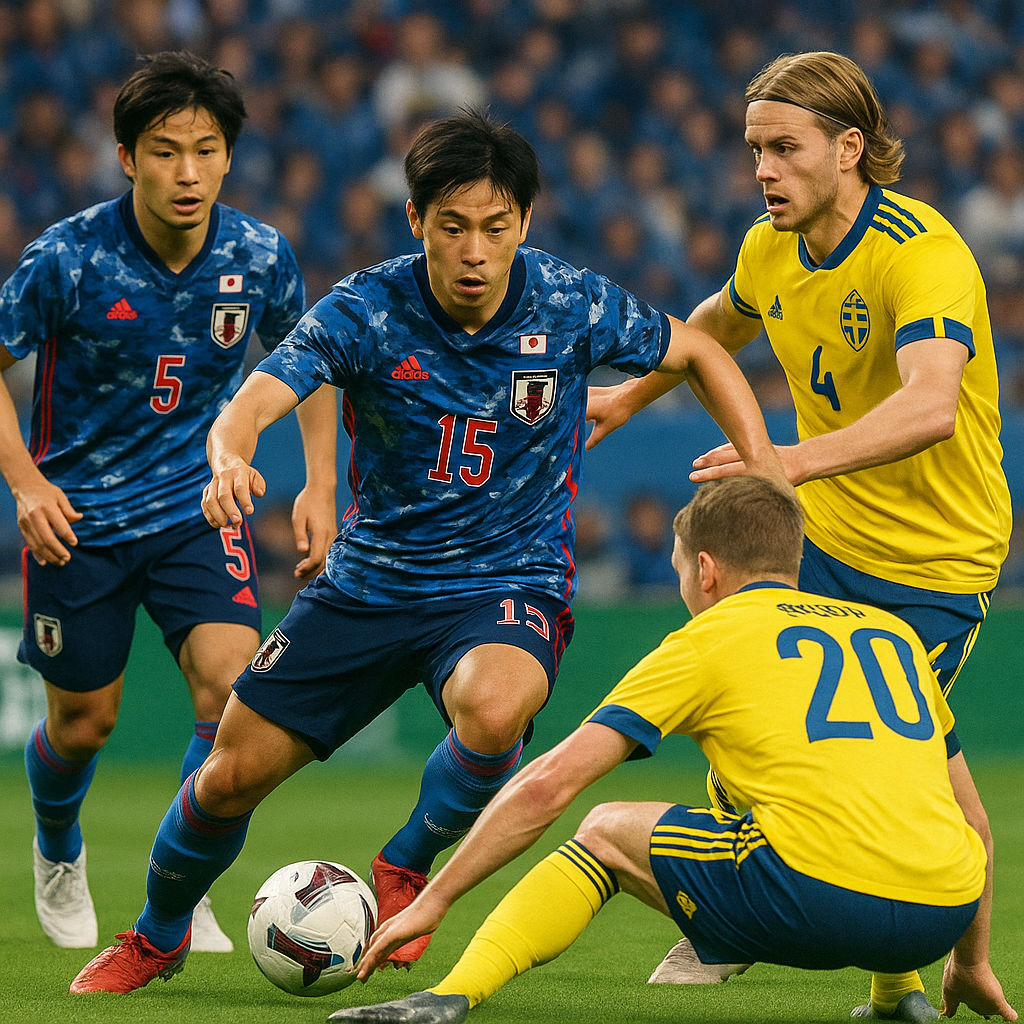
Japan vs Sweden promises a tactical duel that could define Group F’s trajectory.
When these two meet on 25 June 2026, the central question is how Japan’s technical fluidity will counterbalance Sweden’s structured physicality. Both teams have shown in recent tournaments that their strengths lie in contrasting styles: Japan's reliance on rapid positional rotations versus Sweden’s disciplined defensive framework and direct transitional play.
Japan’s approach typically involves a high-tempo pressing scheme and quick ball circulation aimed at destabilizing organised back lines. Their success will depend on how effectively they can manipulate space between Sweden's defensive blocks. This requires precise timing in midfield link-up play and an ability to exploit the half-spaces, particularly on the wings where Japan’s agility is most pronounced. However, the risk lies in vulnerability to Sweden’s well-drilled counter-attacks if possession is lost too cheaply.
Sweden, meanwhile, is likely to deploy a compact 4-4-2 or 4-5-1 shape prioritising defensive solidity. Their strength rests on maintaining structural integrity to absorb Japan’s pressure and then launching swift transitions targeting Japan’s high defensive line. Set-pieces and aerial duels will also be crucial battlegrounds, considering Sweden’s traditionally physical presence. The key shift will come if Sweden manages to force Japan into fragmented possession phases, turning defence into attack quickly with direct, vertical passes.
This match hinges on the balance between Japan’s creative dynamism and Sweden’s organised pragmatism. Early control in midfield and set-piece efficiency could set the tone, given the tightly contested nature of Group F alongside the Netherlands and Tunisia. The side that better manages transitions—Japan avoiding turnovers in dangerous areas, Sweden maintaining discipline without sacrificing forward thrust—will dictate the tempo and potentially secure a vital advantage in this opening round of matches.
In sum, Japan vs Sweden is less about flair and more about how each team’s tactical identity is executed under World Cup intensity. The structural clarity and decision-making under pressure will offer the clearest insight into who begins their campaign with a step closer to progression.