
World Cup
Can France and Sweden Sustain This Start

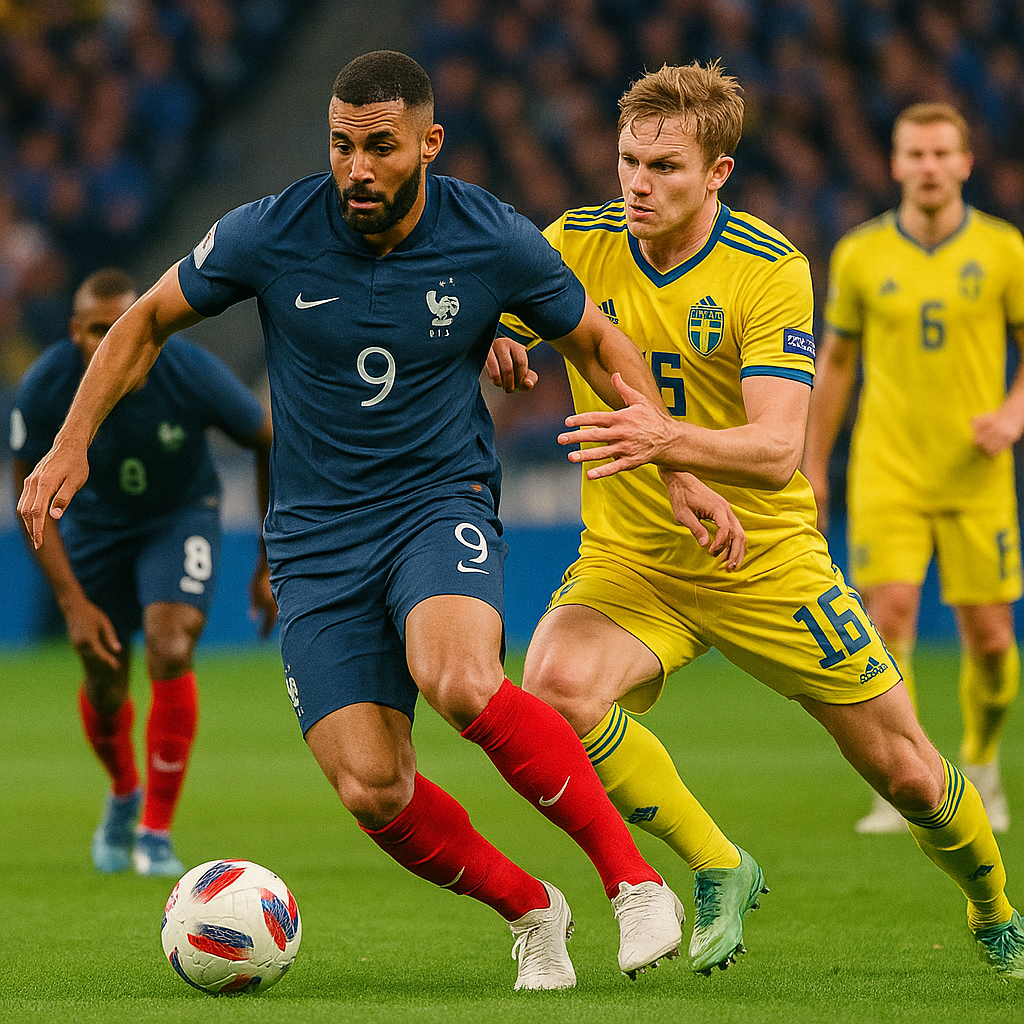
France and Sweden Turn Up the Heat
Early scorelines created a loud narrative, but the deeper question is whether the evidence survives harder opposition.
The tension is clear: This World Cup last-32 clash pits France’s structured attacking versatility against Sweden’s disciplined defensive shape. The outcome will hinge on France’s ability to control transitions and penetrate a compact Swedish block. But can this model survive tougher transitions?
France enter this round with a tactical profile defined by fluidity in possession and patient build-up from the back. Their strength lies in layered midfield rotations designed to create numerical superiority in central zones, coupled with wide overloads supported by dynamic wingbacks. However, against Sweden, who typically deploy with disciplined lines and a low block, France face a challenge in breaking through without conceding counterattacks. Sweden’s pragmatic setup minimizes space between lines, forcing France to rely on quick combinative play and vertical penetrations to unlock their defense.
The midfield battle will be pivotal. France’s transitional speed demands cohesion and individual technical quality to exploit half-spaces effectively. Meanwhile, Sweden’s compactness and cover shadowing limit passing lanes and force turnovers high up the pitch. This pressure on France’s ball carriers tests their tactical patience and composure under duress. Additionally, set-pieces present an opportunity for France given their aerial proficiency, while Sweden will aim to avoid further defensive vulnerabilities in these scenarios.
The key shift in this encounter revolves around France’s ability to maintain possession under pressing without overcommitting forward, which risks exposure to Sweden’s counters. Their defensive reactivity and midfield structure during opposition transitions will determine whether Sweden can convert defensive solidity into offensive opportunities. The French squad depth offers tactical flexibility to adjust formations mid-game, but Sweden’s consistency in maintaining shape reduces the margin for error.
Ultimately, France’s structured attack must synchronize with disciplined defensive transitions to take control of this last-32 tie. Failure to break Sweden’s organized defensive lines risks a prolonged stalemate. The game will serve as a litmus test for France’s tactical maturity in navigating a cautious, well-drilled opponent on football’s highest stage.