
World Cup
Iran’s opener against New Zealand in Group G at the 2026 FIFA World Cup carries considerable tactical subtext

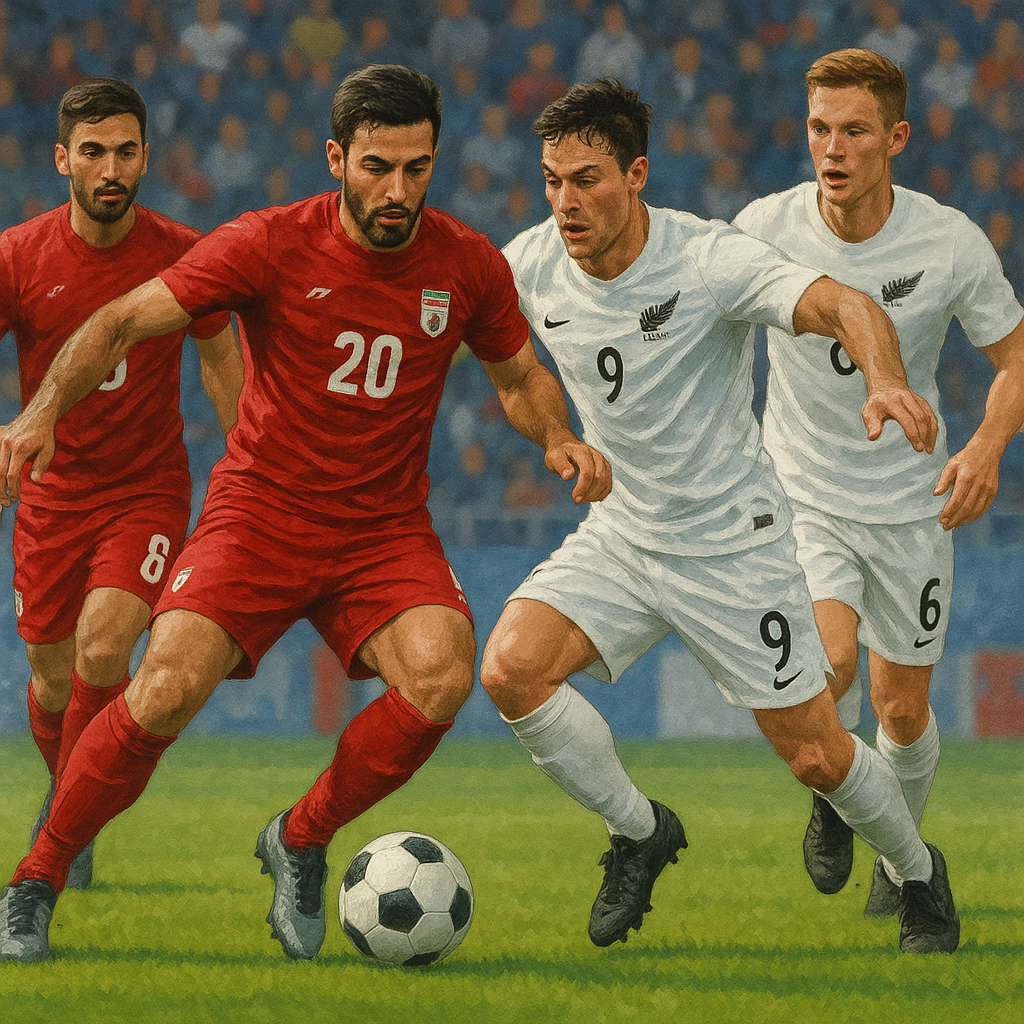
Iran’s opener against New Zealand in Group G at the 2026 FIFA World Cup carries considerable tactical subtext beyond its simple fixture label. Scheduled for June 16 at 01:00 UTC, this clash pits two sides with markedly different stylistic identities yet shared ambitions to upset the group’s hierarchy, which includes Belgium and Egypt.
Iran’s approach traditionally prioritises structural rigidity and disciplined defensive organisation. Their midfield often serves as a dense, contested zone to disrupt opposition transitions and protect a backline that maintains disciplined spacing. Against New Zealand, Iran’s tactical challenge will be implementing a controlled tempo to minimise New Zealand’s counterattack opportunities. Key to this will be managing vertical transitions and nullifying New Zealand’s speed on the break.
New Zealand, conversely, approaches such matches pragmatically, often relying on flexible formations that shift between a compact defensive block and sudden offensive thrusts. Squad depth will be pivotal; the All Whites customarily deploy robust wing play and high-intensity pressing selectively, conserving energy to maximise effectiveness during critical phases. Their transition game typically hinges on rapid ball recovery and exploiting central channels, a tactic requiring precise timing and spatial awareness.
Set-piece proficiency may also influence the balance. Both teams demonstrate variable success rates in dead-ball situations, but precision and delivery quality could prove decisive in a tightly fought encounter. New Zealand’s ability to maintain structural integrity under sustained pressure will determine their defensive resilience against Iran’s probing through-balls and overlapping wingbacks.
This opening Group G game is not merely a contest for points but a tactical chess match defining psychological momentum and positional confidence. Iran’s emphasis on structured build-up and controlling midfield corridors contrasts with New Zealand’s reliance on swift counter transitions and situational pressing. The outcome will hinge on which team more effectively synchronises phase changes—from defensive solidity to attacking fluidity—while adapting to the evolving match context.
Ultimately, this fixture embodies the tactical duality shaping many World Cup group stages: meticulous control versus opportunistic disruption, with New Zealand needing to resist Iran’s measured buildup and Iran aiming to prevent the All Whites from capitalising on transitional vulnerabilities.