
World Cup
Mexico versus South Korea on June 19 in the opening round of Group A at the 2026 FIFA World Cup presents a

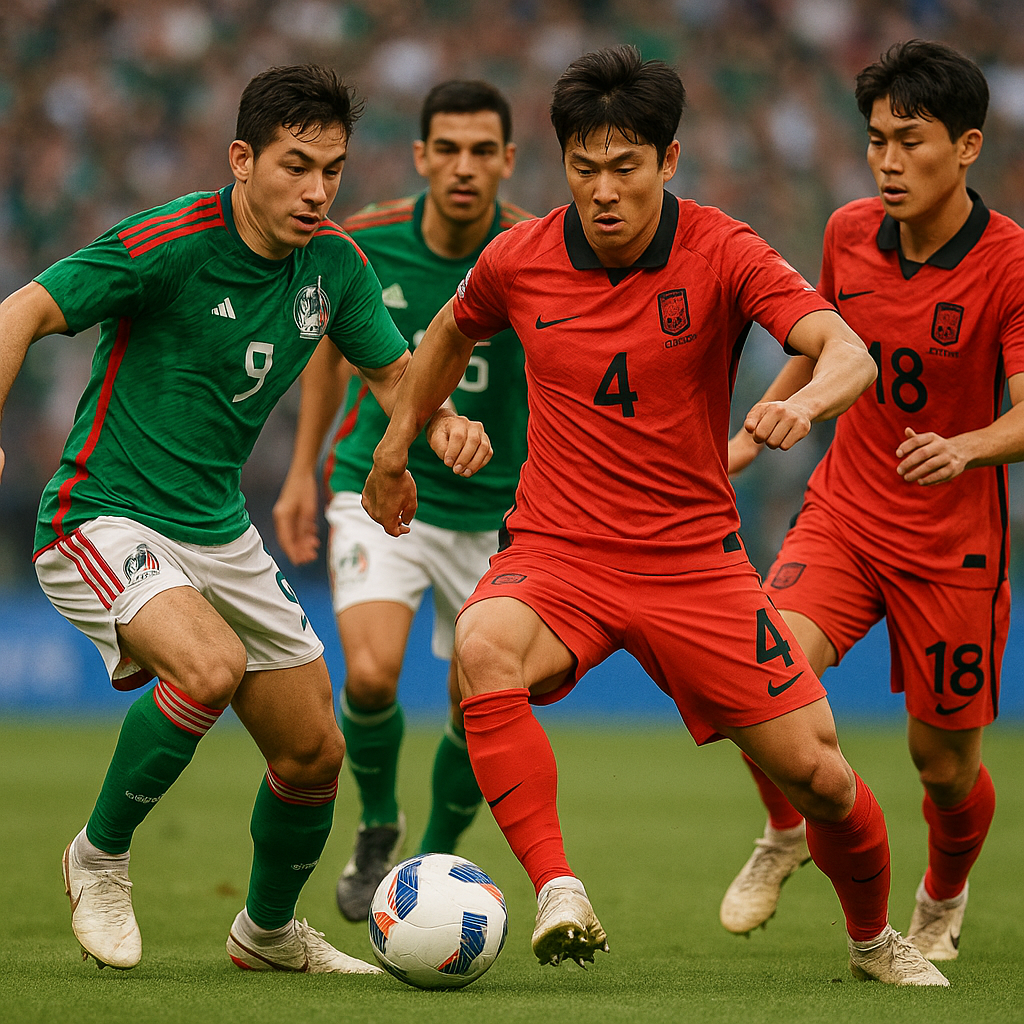
Mexico versus South Korea on June 19 in the opening round of Group A at the 2026 FIFA World Cup presents a fascinating case study in contrasting styles and strategic adaptability. Both teams enter this fixture with clear tactical identities shaped by their recent international campaigns, yet each carries distinct vulnerabilities that could be decisive in a tournament where margins between progress and exit are infinitesimal.
Mexico, playing at home and accustomed to the altitude and atmosphere of a World Cup on native soil, generally exhibits a balanced approach emphasizing control through structured build-up. Their typical 4-3-3 or 4-2-3-1 formations prioritize midfield connectivity and gradual positional progression. Their attacking thrust relies on dynamic transitions and exploiting the half-spaces behind opposition full-backs, a tactic that allows them to bypass dense defensive blocks by lateral interchanges between midfielders and wingers.
South Korea arrives with a contrasting blueprint. Historically marked by intense pressing and swift counter-attacks, South Korea’s approach often hinges on rapid transition phases. Their structural discipline in a usually flexible 4-2-3-1 or 3-4-3 formation underlines their capacity to compress space centrally while inviting opponents into overcommitment, creating room for pacey outlet players to exploit. This high-energy system demands exact timing and collective coherence, particularly when shifting from defense to attack.
However, these established patterns harbor tactical challenges. Mexico’s dependency on structured midfield orchestration can falter under relentless pressure or if South Korea disrupts their rhythm in possession. Equally, South Korea’s pressing and counter-pressing intensity can be compromised if they fail to maintain compactness during Mexico’s sustained positional attacks, potentially exposing gaps in transition defense.
The clash will likely hinge on which side better executes transitional moments and manages the game’s tactical tempo. Mexico’s home advantage and structured dominance will test South Korea’s resilience and counter-attacking efficacy. In turn, South Korea’s aggressive spatial control and vertical speed will probe Mexico’s defensive organization and adaptability under pressure.
Ultimately, this encounter is not merely a physical or technical battle but a contest of tactical precision, adaptability, and strategic patience—key factors influencing South Korea’s World Cup journey from a national footballing perspective.