
World Cup
Group E: Ecuador and German Under Pressure

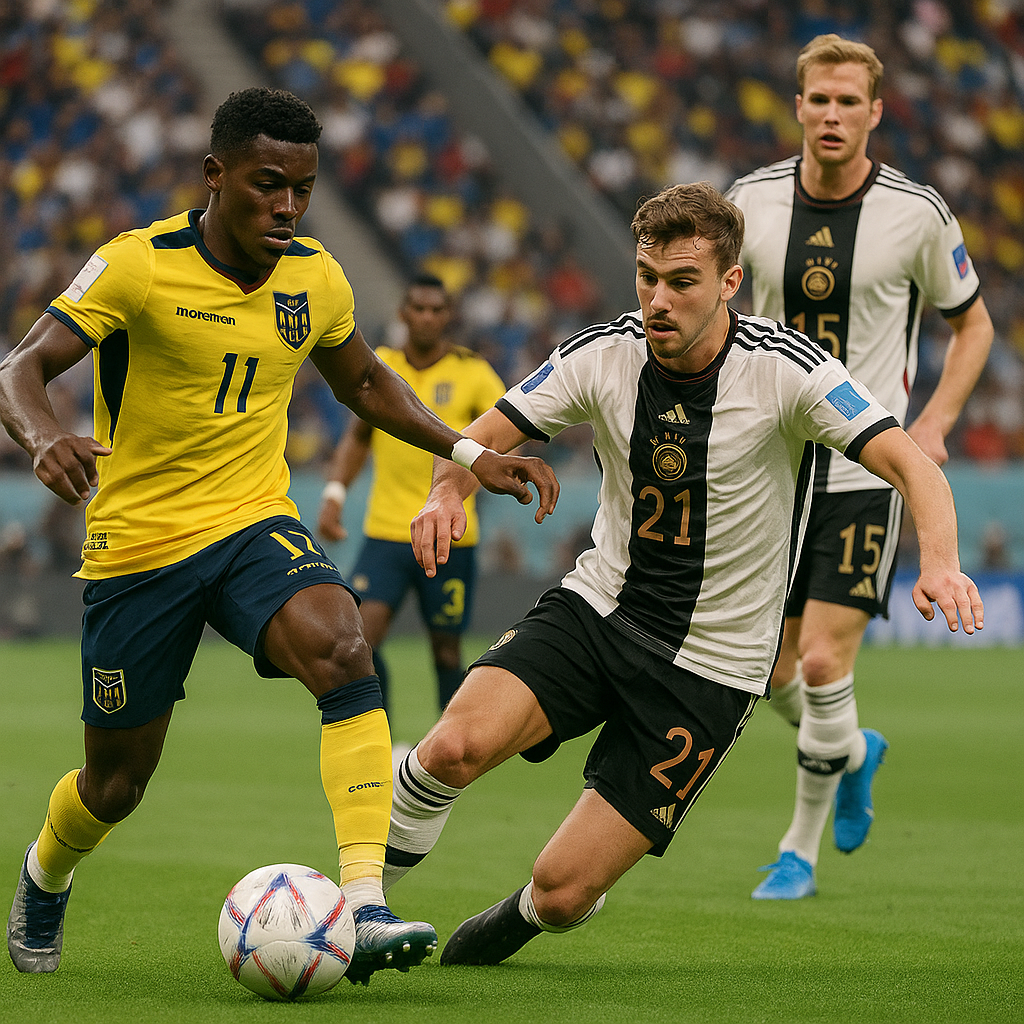
Ecuador’s disciplined structure exposes German transitional flaws in pivotal Group E clash
Germany entered their final Group E match against Ecuador with clear stakes: securing points to keep their knockout hopes alive. Instead, they left Doha’s Khalifa International Stadium with a troubling 2-1 defeat that not only dents their group standing but also exposes deeper tactical shortcomings.
The central tension from the outset lay in Germany’s inability to effectively transition from defense to attack against a compact Ecuadorian side. Ecuador, defending deep with disciplined midfield blocks, successfully slowed German progression through the final third. This forced Germany into repeated wide plays and protracted possession phases that lacked penetration. Ecuador’s defensive shape demonstrated clear preparation to absorb pressure, compacting spaces between lines and limiting German strikers' influence.
Meanwhile, Ecuador capitalized on Germany’s transitional vulnerabilities. Their counter-attacks were sharp, direct, and clinically executed — a pattern Germany failed to stem. Early setbacks in converting defensive solidity into solid counter-pressing allowed Ecuador to exploit spaces left by Germany’s advanced full-backs. The resultant quick breaks led to two decisive goals, underscoring a German side struggling to maintain defensive compactness during offensive transitions.
The key shift came after Germany reduced the deficit to 1-2. Instead of building on momentum, Germany’s attack became increasingly disjointed, exposing a lack of reliable squad depth and tactical flexibility. Without a decisive midfield pivot to control tempo, their buildup remained fragmented. This stifled any consistent pressure on Ecuador’s backline in the crucial late stages.
Discipline, too, was a concern. While no explicit card data is available, Germany’s visible typology of rushed defensive interventions and loss of shape suggested growing frustration. This not only impaired their defensive organization but also undermined attacking confidence.
This result has immediate consequences for Group E standings: Ecuador leapfrogs with a crucial three points, while Germany’s prospects now hinge on other outcomes. More importantly, this match reaffirms the limits of Germany’s current squad in navigating high-stakes scenarios that require precise transitional and structural control — areas that demand urgent tactical recalibration ahead.